 Grey Folio
Nuruk does not announce itself. In the finished drink — a glass of makgeolli, a measure of distilled soju, a cocktail built on craft rice wine — the work it has done is invisible. What remains is a flavor: lactic brightness, an umami undertone, a finish that extends longer than the alcohol alone would carry. These are the traces of fermentation. Nuruk is the engine that produced them.
This note looks at nuruk from two angles: the people making it with serious intent, and the bartenders building with what it produces.
Part I: The Breweries
Ellyeop Pyunjoo, Andong — Six Hundred Years of Nuruk
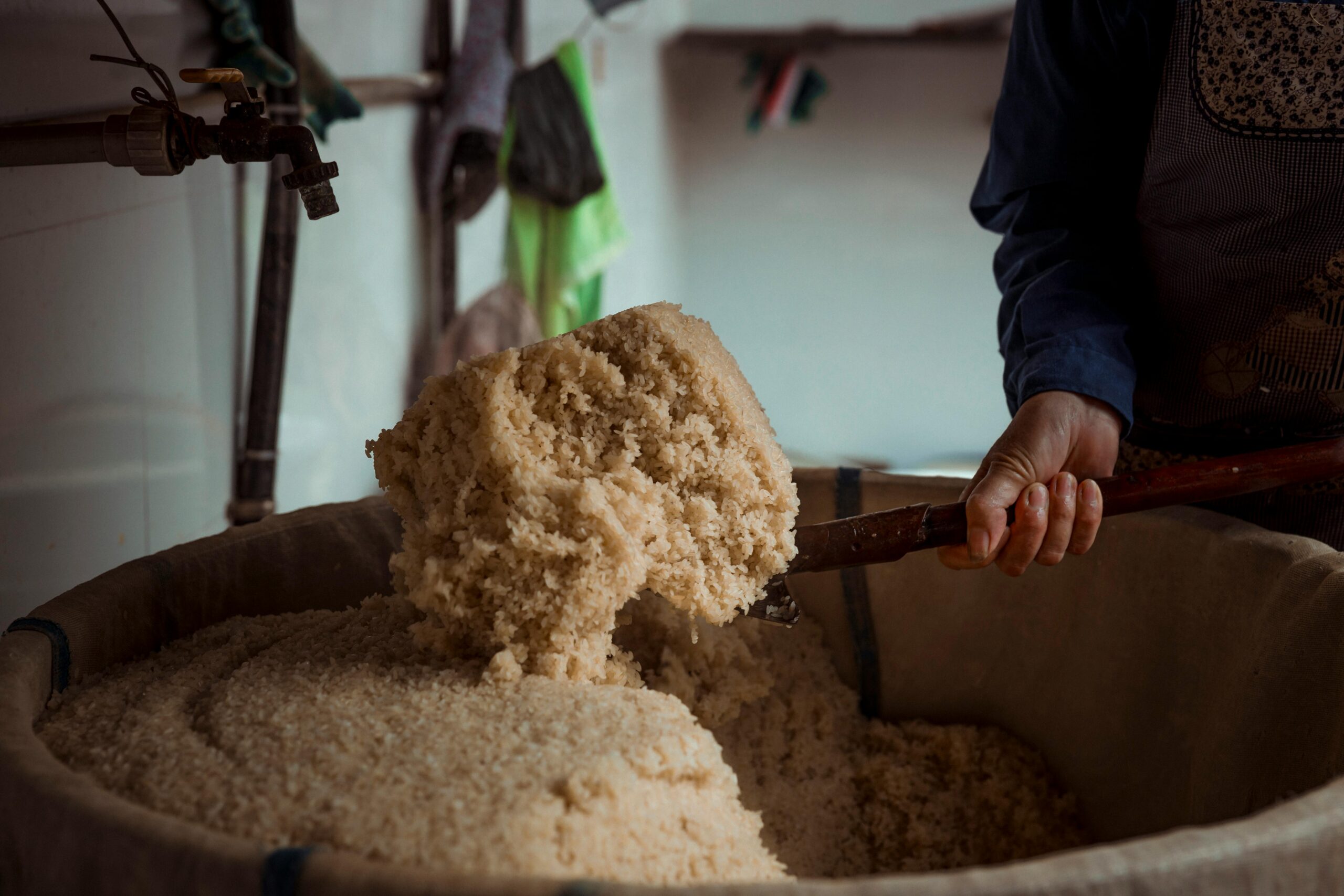
Won-jeong Lee is an 18th-generation family matriarch. The recipe she works from is 600 years old. Her brewery, Ellyeop Pyunjoo — named for a poem written by a Joseon Dynasty scholar who was a Lee family ancestor — sits at the family’s historic estate in Andong, where the sool is made from local rice, spring water from nearby mountains, and nuruk dried in the sun for thirty days.
The thirty-day sun drying is not tradition for tradition’s sake. It produces a nuruk with specific microbial characteristics — a slow-developing community of wild organisms shaped by the climate and air of that particular region, at that particular time of year. Lee’s husband, Sung-won, describes the philosophy plainly: “The nuruk, rice, water, and air all have to be good. But most importantly, you need the utmost care. Even if it’s the same recipe, the sool tastes better when she makes it.”
Lee learned to brew from her mother-in-law, who described the process as raising a baby. The comparison is not decorative — it points at something technically accurate about nuruk fermentation. A nuruk batch, like a child, cannot be standardized into predictable outputs. It responds to conditions. It requires attention, not procedure.
Atto Brewery, Seoul — Nuruk and Hyomo Together
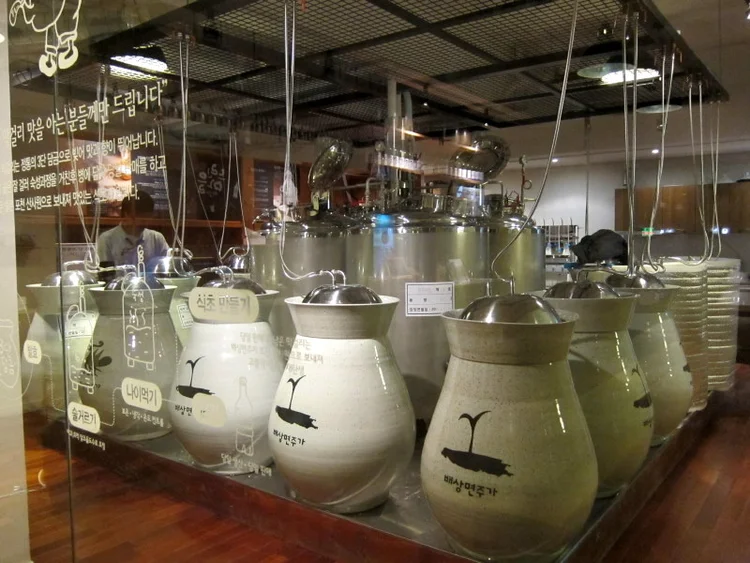
Opened in May 2023 by Kwon and Park, Atto operates on a different philosophy — one that does not treat tradition and modernity as opposites. The brewery makes takju, makgeolli, and yakju using water, nuruk, and local rice in the traditional way, but also works with hyomo (yeast), which gives more flexibility to shape the final flavor profile.
Kwon describes the approach directly: “We use traditional and modern brewing techniques but only natural fermenting agents.” The name Atto — from Sino-Korean characters meaning “right path” — signals the brewery’s intention: not to choose between old and new, but to find the line where they are genuinely compatible.
Their yakju — described as akin to white wine in its clarity and refreshing character — has won awards and become their flagship. It is a product that nuruk-only fermentation would likely not produce in the same form. The hyomo contributes predictability; the nuruk contributes character. The combination, in Atto’s hands, produces something that is neither purely traditional nor merely modern.
Part II: The Bars
Zest, Gangnam — Fermentation as a Building Block
Zest — Asia’s No. 2 bar in 2025, Best Bar in Korea for three consecutive years — operates on a zero-waste, hyper-local sourcing philosophy. Everything that can be made in-house is made in-house. This extends to carbonated beverages, house spirits, and fermented components that appear across the menu in different forms.
No Coconut Here — their riff on a Piña Colada — makes this visible. The build: over-proof craft makgeolli, mezcal, lime, lacto-fermented pineapple, walnut orgeat. Two fermented Korean elements in a single drink. The makgeolli brings active lactic acidity and textural weight. The lacto-fermented pineapple mirrors that acidity while adding tropical complexity. The mezcal’s smoke sits underneath, not competing with the fermented character but extending it into something drier and more dimensional.
What Zest demonstrates here is not the use of makgeolli as a novelty ingredient. It is makgeolli understood as a fermentation tool — chosen for what it does technically to the drink, not for what it signals culturally. The lactic character that nuruk produces in fermentation is the reason it works here. The cultural significance is present, but it is not the argument.

OUL Bar, Four Seasons Seoul — Fermentation in Context
OUL Bar’s approach is more narrative. Head bartender Ike Ryu’s menu is organized around Korean drinking culture’s past, present, and future — three sections titled Traditional, Turn of the Century, and Today and Beyond. Within this structure, fermented Korean ingredients appear not just as flavor components but as cultural reference points.
Milsu sits in the Traditional section. The build: makgeolli, pine needle tea-infused rum, pine powder, honey, cream. The creamy texture that defines the drink comes from two sources working together — the suspended rice solids and active fermentation of the makgeolli, and the cream. The pine needle and pine powder introduce an aromatic layer that pulls the drink into the landscape of Korean mountain forests, where makgeolli has been consumed for centuries.
Where Zest uses fermentation technically, OUL Bar uses it contextually. The makgeolli in Milsu is not primarily there for its lactic acidity — it is there because it belongs in the Korean mountain landscape the drink is invoking. The fermented character supports the narrative. Both approaches are valid. They are simply asking different questions of the same ingredient.
What Both Ends Reveal
Won-jeong Lee at Ellyeop Pyunjoo dries her nuruk in the sun for thirty days because the organisms that develop during that time — shaped by Andong’s air, season, and microclimate — produce a sool that no standardized process can replicate. Kwon at Atto uses nuruk alongside hyomo because the combination produces outcomes that neither could achieve alone. Demie Kim at Zest builds with makgeolli because the lactic fermentation character it carries does specific technical work in a drink that mezcal and lime alone cannot do. Ike Ryu at OUL Bar puts makgeolli in Milsu because it places the drink inside a cultural and sensory landscape that is otherwise unavailable.
These are four different relationships with the same fermentation tradition. What they share is that none of them is treating nuruk as a trend ingredient, a cultural garnish, or a shorthand for Korean authenticity. Each is asking what fermentation actually does — to a spirit, to a flavor, to a drink, to a narrative — and building from the answer.
These are four different relationships with the same fermentation tradition. What they share is that none of them is treating nuruk as a trend ingredient, a cultural garnish, or a shorthand for Korean authenticity. Each is asking what fermentation actually does — to a spirit, to a flavor, to a drink, to a narrative — and building from the answer.
Related: Nuruk: The Fermentation Engine Behind Korean Spirits — Makgeolli, Reconsidered — Soju, Reconsidered
[addtoany]