 Grey Folio
Omija demands careful handling. It’s a ingredient that makes it easy to start in the wrong direction.
“Five flavors at once” is technically accurate — sweet, sour, bitter, salty, pungent, all present in a single berry, which is where the name comes from: o (五, five) mi (味, flavor). But this description is also the starting point for most misreadings of the ingredient. Five flavors present simultaneously and equally — that’s not how omija works.
What Omija Actually Is
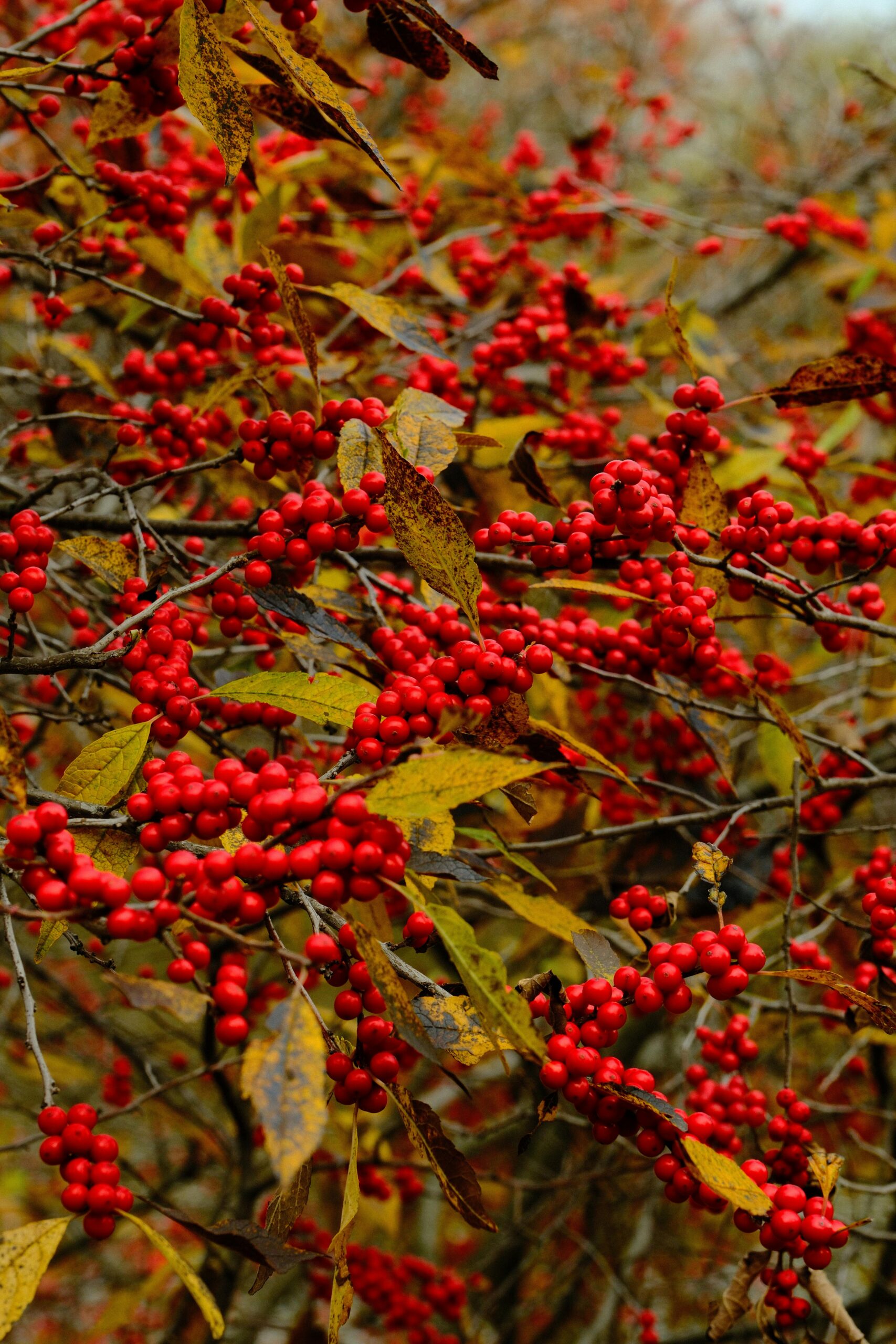
Omija (Schisandra chinensis) is the berry of a woody vine in the magnolia family, grown primarily in Korea’s mountainous regions — particularly Mungyeong and North Gyeongsang Province — at elevations between 400 and 700 meters. The berries grow in clusters like grapes, roughly a centimeter in diameter. Color ranges from vivid ruby red to deep purple depending on harvest timing and drying method.
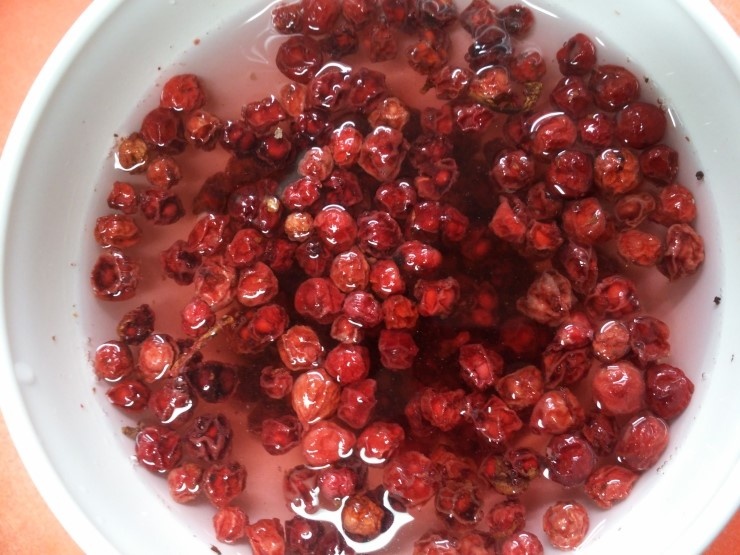
The five flavors don’t exist independently. When cold-steeped — prepared as omija-cha (五味子茶) — the dominant sensations are acidity and a faint saltiness. Bitterness and pungency operate in the background; we experience them not as distinct tastes but as length and complexity. Sweetness is present but not forward. Hot water extraction pulls bitterness sharply to the front. This is why cold steeping for 8–24 hours is non-negotiable in any serious application.
The key compounds are lignans, including schisandrin. These create omija’s characteristic acidity and aromatic quality — not the straightforward berry tartness of cranberry or the floral brightness of hibiscus, but something deeper, more sustained, with a slight astringency that lingers.
Omija vs. The Berry Vocabulary Bartenders Already Have
The comparison that comes up most often when introducing omija to Western bartenders is cranberry. The color is similar; the tartness is shared. But the comparison breaks down quickly.
Cranberry’s acidity is sharp and frontal — citric acid-driven, direct, the same family as lemon or lime tartness. Omija’s acidity is different. It’s built from a complex of organic acids that read as gentler, longer, less aggressive. A better analogy is the tannin structure of a delicate red wine, or the dry finish of a well-made herbal bitter.
Hibiscus also comes up frequently. The color similarity and the floral-tart profile invite comparison. But hibiscus leads with floral notes and has relatively simple acidity. Omija is closer to herbal than floral, and carries a density in the finish that hibiscus doesn’t.
The distinction matters practically. Substituting cranberry or hibiscus for omija will not produce the same result. These are different tools.
The Preparation Problem
Two mistakes appear consistently among bartenders working with omija for the first time.
The first: hot water extraction. As noted, hot water accelerates bitterness dramatically. The result moves toward medicinal territory — functional but difficult to work with.
The second: single extraction. Omija yields meaningfully different results across multiple cold steeps. The first steep (8–12 hours) produces high acidity and deep color. The second steep (additional 12 hours) reduces acidity and brings forward sweetness and herbal notes. These are not the same liquid, and they can be used for different purposes.
Three practical forms for bar use:
Omija cold steep — dried berries in cold water for 8–24 hours. High acidity, vivid color. Use as the acid component in builds, or combine with soda as a standalone base.
Omija-cheong — fresh or dried omija layered with equal-weight sugar, aged over weeks or months. The same logic as yuja-cheong. The result integrates acid and sweetness into a single ingredient, simplifying builds while adding complexity.
Omija cordial — cold steep dissolved with sugar. More immediate flavor delivery than cheong, slightly less integrated. Works well in highballs and longer drinks.
Behind the Bar: Who’s Already Working With It
At OUL Bar inside the Four Seasons Seoul, Ike Ryu uses Korean blackberry and omija together in the K-Negroni. Within the Negroni’s bitter structure, omija’s astringent acidity complements Campari’s role while red fruit notes resonate with sweet vermouth. This isn’t cultural substitution — it’s a functional replacement with a reason.
Bar Cham, which appeared on Asia’s 50 Best Bars 2025, layers omija with perilla and fermented grains across its menu. Head bartender Soohyun Kim’s approach is to stack complexity beneath omija’s acidity rather than feature the ingredient alone.
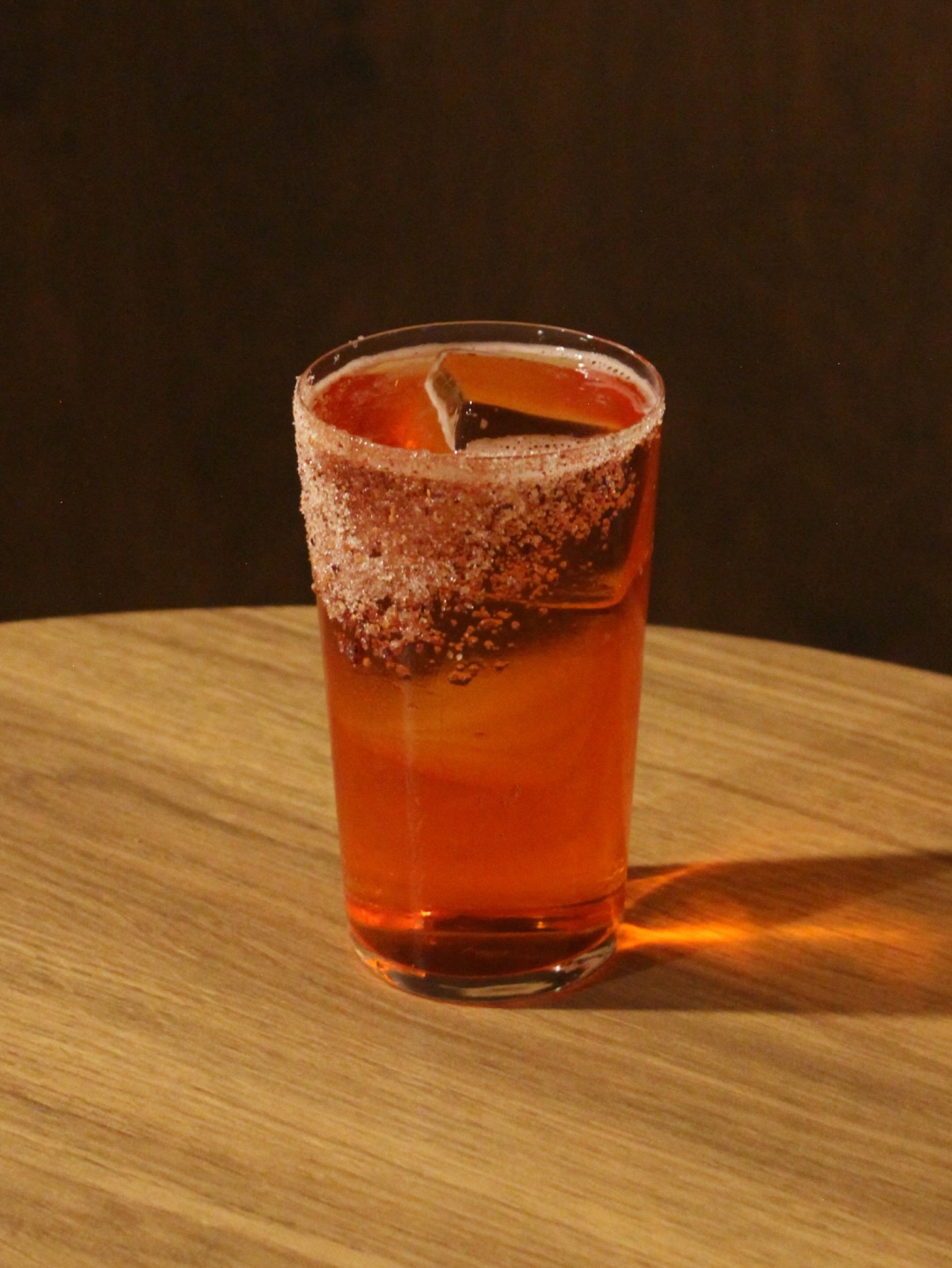
At 1914 Bar & Lounge inside Josun Palace Seoul, the Room Boy uses omija berry cordial alongside blanco tequila, lemon juice, Fernet Branca Menta, Tabasco, and strawberry-hibiscus foam. Here omija acts as both acid element and flavor bridge — resonating with hibiscus’s floral register on one side and Fernet’s herbal bitterness on the other.
Three different approaches. The common thread: none of these bars is using omija as cultural atmosphere. The selection is functional — acidity, color, tannin structure, complexity.
Flavor Pairing Logic
The spirits and ingredients that work well with omija share a common logic.
Distilled soju — omija’s organic acid acidity resonates with soju’s clean grain finish. They speak the same language. The pairing logic parallels yuja and soju.
Gin — omija’s herbal-floral profile integrates well with gin’s botanical structure. Better with drier, more peppery expressions than heavily floral ones.
Light whisky — Japanese-style or Irish rather than heavy single malt. Omija’s acidity won’t hold its own against deep oak weight.
Hibiscus, rosehip — similar color family, different flavor profile. Used together, omija’s herbal notes and hibiscus’s floral register form distinct layers.
Fermented ingredients — makgeolli, yuja-cheong, doenjang. Materials sharing lactic acidity don’t clash — they build depth together.
Avoid — heavily peated Scotch, high-oak bourbon. Omija’s delicate layering disappears. And excessive added sugar — when using omija-cheong or cordial, watch sweetness levels carefully. The acid-sugar balance in the ingredient is already precise.
from antidote.seoul
A Practical Starting Point
The simplest entry point for omija in a bar program is a cordial.
Cold-steep 50g of dried omija in 500ml cold water for 12 hours. Strain. Dissolve 200g sugar into the liquid. The result is a vivid ruby cordial usable anywhere a raspberry liqueur might appear — but producing something considerably more complex.
For omija-cheong, fresh berries are ideal but dried work. Outside Korea, commercial cheong products are accessible: Onggi and Nokchawon both produce versions available internationally.
Omija is not yet a standard ingredient in the Western bar pantry. That is the reason to work with it now.
Related: Yuzu vs. Yuja — Soju, Reconsidered — What Nuruk Actually Does